
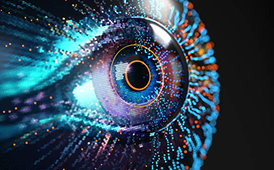
👁️ How AI is Transforming Eye Care: A Clearer Future for Your Vision
At Lunera Eye Care, we are committed to bringing you the most advanced, precise, and accessible vision care available. That’s why we’re excited to share how Artificial Intelligence (AI) is fundamentally revolutionizing the field of ophthalmology, ushering in an era of unprecedented accuracy, efficiency, and personalized treatment.
AI is no longer a futuristic concept; it is an indispensable tool that is already at work, helping us protect and preserve your most precious sense: sight.
1. The Power of Early and Accurate Diagnosis
One of AI’s most profound impacts on eye care is its ability to analyze complex eye images with speed and precision that rivals, and in some cases, exceeds human capability. AI algorithms, particularly those using Deep Learning, are trained on millions of retinal scans and OCT (Optical Coherence Tomography) images to spot minute abnormalities that even the most experienced human eye might miss in the early stages.
Key Disease Detection Breakthroughs:
- Diabetic Retinopathy (DR): AI systems can automatically screen retinal images and identify early signs of damage, such as microaneurysms, long before a patient experiences symptoms. Early detection is crucial, as timely intervention can reduce the risk of vision loss by over 90% for diabetic patients.
- Glaucoma: This “silent thief of sight” often causes irreversible vision loss without noticeable early symptoms. AI can analyze visual field tests and subtle changes in the optic nerve head to identify glaucoma and predict its progression with high accuracy, enabling earlier treatment.
- Age-Related Macular Degeneration (AMD): By analyzing OCT scans, AI can detect subtle fluid, pigment changes, and deposits (drusen) in the macula, forecasting the risk of AMD progression and guiding prompt therapeutic intervention.
What This Means for You:
Faster, more consistent, and highly accurate screening means we can detect sight-threatening diseases at their most treatable stage, leading to better long-term outcomes and peace of mind.
2. Personalized Treatment and Predictive Analytics
AI doesn’t stop at diagnosis. Once a condition is identified, machine learning models step in to help create hyper-personalized treatment plans.
- Customized Care: AI analyzes vast amounts of clinical data, genetic factors, and the patient’s unique imaging results to recommend the most effective and least invasive treatment strategy. This minimizes the “trial-and-error” period, accelerating your path to better vision.
- Forecasting Future Health: Advanced AI models can predict the likelihood of a disease progressing within a certain timeframe. This allows our specialists to proactively adjust your monitoring schedule or treatment plan, moving from reactive care to truly predictive and preventative eye care.
3. Enhancing Surgical Precision
In the operating room, AI and robotics are working together to enhance the precision of delicate eye procedures.
- Surgical Planning: For procedures like cataract surgery and LASIK, AI analyzes preoperative corneal measurements and ocular biometrics with unmatched accuracy. This data helps our surgeons plan the exact placement of intraocular lenses (IOLs) and precise laser incisions, significantly improving post-operative visual acuity and reducing complication risk.
- Real-Time Guidance: In the future, AI-guided robotic systems will assist surgeons in real-time, providing an extra layer of safety and meticulousness for the most intricate tasks.
4. Tele-Ophthalmology: Expanding Access to Care
A major global challenge is the lack of specialized eye care in rural or underserved areas. AI is bridging this gap through Tele-Ophthalmology.
- Remote Screening: Patients can have retinal images captured using simple camera attachments or specialized kiosks in primary care offices. AI algorithms can then instantly analyze these images for common eye diseases.
- Efficient Triage: The results are then transmitted to a specialist for remote review. This efficient workflow allows us to quickly identify patients who need an urgent in-person visit versus those who can be monitored remotely, effectively bringing expert screening to more people, faster.
5. AI in Your Routine Exam: The Lunera Advantage
While AI is a powerful tool, it’s crucial to understand its role. AI is designed to be an **assistive technology**, not a replacement for the skilled, compassionate care of our eye specialists.
At Lunera Eye Care, we integrate AI-driven insights to:
- Validate and Expedite Diagnosis: The AI acts as a sophisticated digital second opinion, confirming findings and speeding up the time it takes to get you a clear diagnosis.
- Focus Our Expertise: By automating the initial screening and analysis of routine data, our doctors can spend more time focusing on complex cases, discussing your concerns, and crafting a truly personalized treatment relationship.
- Future-Proof Your Vision: We are continually adopting new, clinically-validated AI tools to ensure you are benefiting from the cutting edge of vision science.
Conclusion: A Bright, Clear Future
The integration of Artificial Intelligence into eye care marks a pivotal moment in medicine. It promises a future where preventable blindness is significantly reduced, where diagnostics are faster and more accurate than ever, and where every treatment plan is deeply personalized.
At Lunera Eye Care, we are excited to be at the forefront of this transformation, leveraging AI to enhance the quality of your care and ensure a brighter, clearer future for your vision.
Ready to experience the future of eye care?
Would you like to schedule a comprehensive eye exam to have your vision evaluated using the latest diagnostic technologies?
